







The Bezzera BZ10 excels at its core duties. It delivers remarkable consistency in temperature and pressure—everything you need for pulling a great espresso. As one of the most affordable espresso machines in the heat exchanger segment, it is a strong contender for the value-for-money podium in our testing series.
Learn more about how it compares against 11 other heat exchanger espresso machines here.
Great Espresso! What More Could You Want?
If your primary goal is delicious espresso, you won't go wrong with the Bezzera BZ10. It masters the essential tasks of an espresso machine with ease. The brew temperature is exceptionally stable, oscillating gently between 92 and 94 °C. Very rare spikes to 95 °C had almost no impact on in-cup quality as long as shot frequency didn't exceed one espresso per minute.

Bezzera BZ10 Front View
The steaming performance of the Bezzera BZ10 leaves nothing to be desired either. Silky microfoam for latte art is easy to achieve. Steam pressure is abundant, meaning texture quality is simply a matter of practice.
Considering its retail price starting at around CHF 1,460 in Switzerland and from €1,100 in the EU, the Bezzera BZ10 is a superb entry-level choice for anyone prioritizing beverage quality in the cup.
However, the machine makes a few compromises along the way in terms of materials and user comfort. If you don't mind those details, you don't need to read any further. But if you have heat-sensitive fingers, you'll want to check out the next sections.
If you want to master pulling great espresso, check out our Home Barista Online Course or get a solid overview in our guide on espresso preparation.
Sharp Edges and Sensitive Fingers
An espresso machine gets hot! Naturally—water has to be heated up. On a heat exchanger machine, the main boiler is heated to well over 120 °C (248 °F). The copper tube passing through the boiler then transfers this heat to the brew water. Originating from the boiler, heat dissipates throughout the chassis. In higher price brackets, boilers are insulated to keep the heat contained within the boiler. On the BZ10, heat radiates generously everywhere it can be absorbed—namely into the metal panels!

How a heat exchanger (HX) espresso machine works
Another heat source—intentionally fitted with its own heating elements on the BZ10—is the group head. Heat spreads from there along all thermally conductive parts. And on the BZ10, things get hot. You should never touch a group head anyway, but what about toggle switches and buttons?
You can barely touch the power switch or the coffee extraction toggle switch for more than 2 seconds without burning your fingers, even with barista hands accustomed to hot pitchers. These switches reach temperatures well over 60 °C (140 °F)! That is far from user-friendly.
The steam wand is a traditional single-wall wand—not a modern cool-touch wand. However, a rubber sleeve is fitted to allow safe handling.
When it comes to the edges of the bent stainless steel housing, Bezzera saved time on deburring. While sharp internal edges aren't a major issue unless you're removing the water tank, the front, highly visible corners of the machine can easily scratch or cut your hands when reaching quickly for a cup. That could be finished much better.
Size, Weight, and Technical Specs of the Bezzera BZ10
With a width of 25 cm, height of 37.5 cm, and depth of 42.5 cm, the Bezzera BZ10 is reasonably compact—though it still weighs a solid 19 kg. The vibration pump is clearly audible and causes noticeable vibration, which makes the water tank cover rattle audibly. The boiler volume is 1.5 liters and the water reservoir holds 2 liters.
| Specification | Bezzera BZ10 |
|---|---|
| Price | from €1,100 (EU) / from CHF 1,460 (CH) |
| Type | Heat exchanger (HX) with vibration pump |
| Group Head | Electrically heated group head |
| Brew Temperature | 92–94 °C |
| Warmup Time | approx. 22 minutes |
| Boiler Capacity | 1.5 liters |
| Water Tank | 2.0 liters (with intake hoses) |
| Dimensions (W × H × D) | 25 × 37.5 × 42.5 cm |
| Weight | 19 kg |
The water reservoir uses intake hoses that hang down into the tank. Nowadays, much cleaner solutions exist with bottom-mounted valves. But as mentioned, this is an entry-level machine where Bezzera deliberately kept costs down.
Hot water dispensing is activated via a lever, as is steam for milk frothing. A handsome dual-pressure gauge displays both boiler pressure and pump extraction pressure during brewing.

Barista trainer Michel Aeschbacher testing the Bezzera BZ10
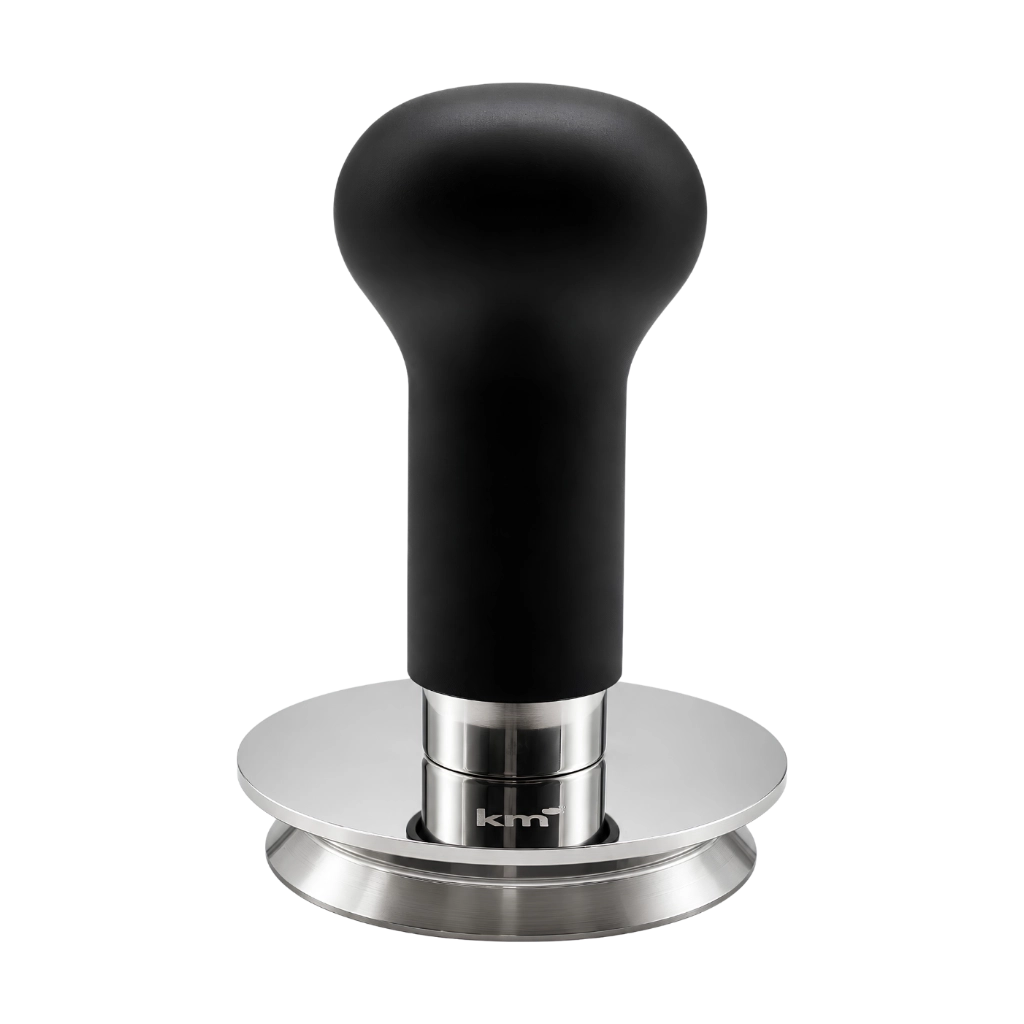
The machine ships with a plastic tamper that belongs straight in the trash. The included filter basket is significantly larger than its rated 16 g capacity. In practice, we easily dosed 21 g into the basket. This has direct consequences for your shot yield: if you follow our recommended brew ratio of 1:2.5, your final beverage weight will be larger accordingly (21 g in × 2.5 = 52.5 g yield, or two espressos of ~26 g each).
Looking at the side profile, it's clear that the drip tray is somewhat shallow. An extra 3 cm of depth would have prevented stray drops from spilling over the front of the machine.
The 3-way solenoid relief valve also contributes to stray drops around the machine base, as explained in detail in our video review.
Heated Group Head (BZ10) vs. Faema E61 Group Head
Most heat exchanger espresso machines on the market are built with the iconic E61 group head, which is nearing its 60th anniversary. The E61 group is kept hot primarily by a thermo-siphon water circuit.
A group head is the front component into which the portafilter—and thus the coffee puck—is locked. Maintaining a thoroughly heated group is vital; otherwise, brew water loses its heat directly to the cold metal and fails to reach proper extraction temperatures. In our testing protocols, we define an ideal brew temperature range of 93 to 94 °C.
The Bezzera BZ10 relies on an electrically heated group head with dedicated heating elements. The rock-solid temperature performance of the BZ10 proves Bezzera right—this group head leaves nothing to be desired.

Constant brew temperature on the Bezzera BZ10
In our view, neither an E61 nor an electrically heated group has fundamental inherent superiority. What matters is delivering the correct temperature to the puck. That doesn't depend solely on the group head design, but on the machine's entire thermal design: How far does water travel from boiler to group? How fast does the heat exchanger heat incoming water? When does the boiler element kick in?
Disassembling the Bezzera BZ group for service is slightly easier than servicing an E61 group, requiring only three bolts to open. However, we consider this a minor detail for home users.
Nor is warmup time dramatically faster. The BZ10 still took roughly 22 minutes to become fully thermally saturated.
Verdict: Bezzera BZ10
The BZ10 delivers where it matters most: delicious espresso shots and great microfoam quality. That is a joy to work with! Anyone prioritizing in-cup quality will be very happy with the BZ10.
To achieve this price point, the machine makes compromises in materials and ergonomics. The included plastic tamper is useless for quality espresso brewing. Several exterior components overheat—including the toggle switch used to start espresso extraction, which reaches uncomfortable temperatures.
We also dislike the sharp, un-deburred metal edges along the chassis, which present a minor injury risk during daily handling.
Nevertheless, as an extraordinarily temperature-stable machine in the entry-level heat exchanger category, the Bezzera BZ10 remains a top contender for the price-to-performance crown despite its material quirks. Consistency is paramount for beginner baristas—and consistency is something the Bezzera BZ10 delivers without a shadow of a doubt!

Espresso preparation with the Bezzera BZ10
Check out our complete Heat Exchanger Espresso Machine Comparison Guide for an overview of competing models.


